
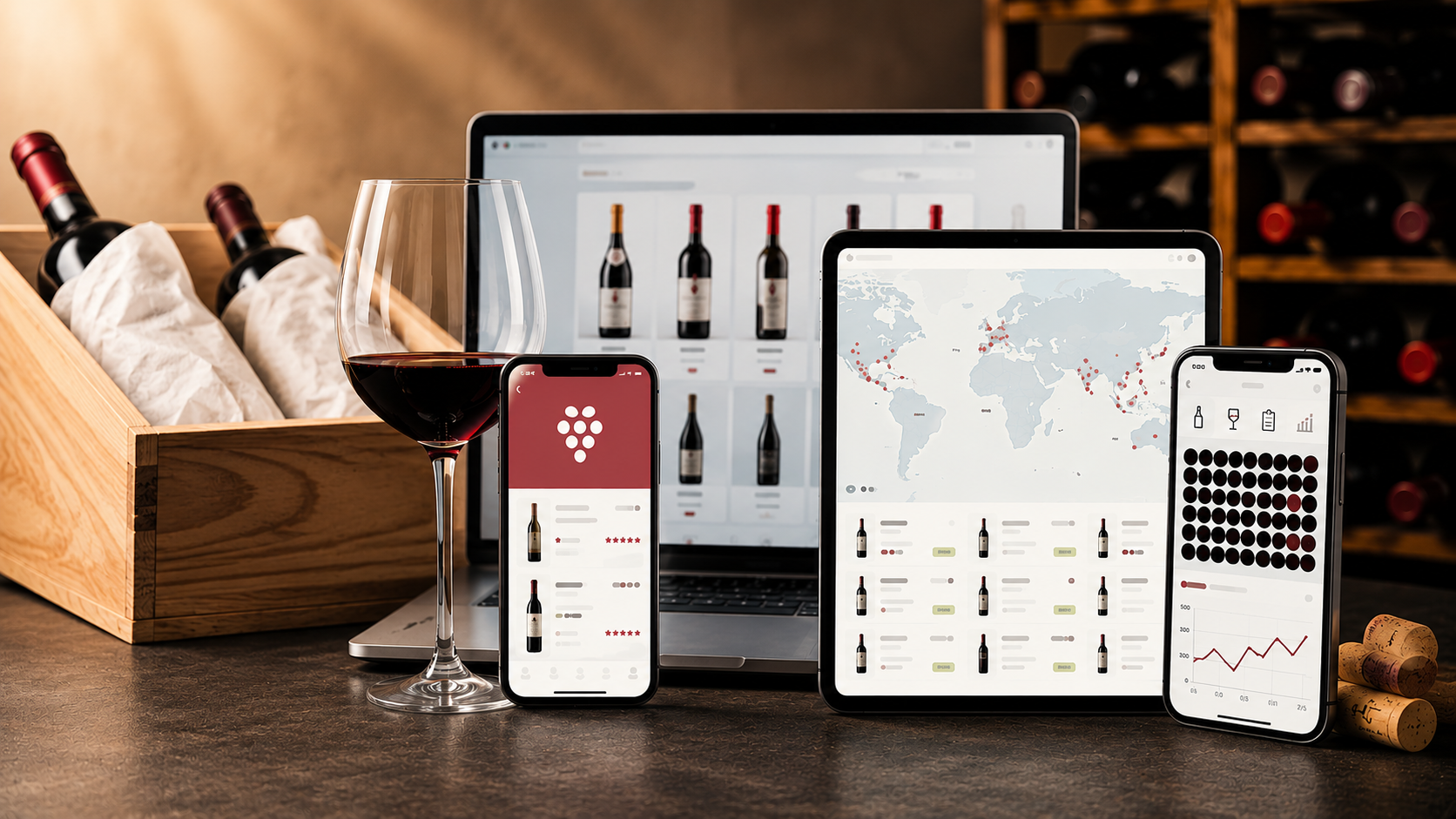
Back in the day (Did I just catch you rolling your eyes?), but yes, back in the day, if you wanted to learn about wine you had to go to a wine shop and take a class – in person! Or you had to subscribe to a wine publication that was sent to you (in the mail) once a month and that had articles and wine rankings that were hard to understand.
Thank goodness for the internet and smartphones!
As I began my own wine education and then started to collect wine, I searched for resources to help me. And while I attended some classes (in person) and subscribed to a couple wine magazines (that appeared every month in my mailbox), I began to rely more and more on websites and apps.
Now I primarily use four websites that also have app versions. I find it interesting that all four have been around for at least 16 years. Each has been able to keep up with the latest trends and technology, and each fulfills a different need for wine consumers.
- WineBid (launched in 1996) – buying and selling online
- Wine-Searcher (1999) – finding and comparing wine prices
- CellarTracker (2003) – managing wine collections
- Vivino (2010) – social discovery using smartphones
Let’s look at each of these a little more in-depth. All but WineBid have free and paid versions. You will see – kind of an intriguing thing – that going in reverse chronological order showcases each site’s usefulness as a wine “beginner” moves through different phases of their wine experience.
Vivino
The typical Vivino user is the casual wine consumer, often someone just beginning to learn about wine and discovering what they like – somebody who wants a little guidance when they are shopping for wine.
Essentially, Vivino presents information crowdsourced from its millions of users worldwide to help you learn about particular wines using your smartphone.
All you do is simply take a photo of a wine bottle label and Vivino tells you all about the wine: average pricing, what it tastes like, food pairing suggestions, and community ratings. One of the good things about the app is that all of the information comes from everyday consumers, and not so-called experts, so you get information that is a little more democratized. It’s quick and easy, so you can use it right in the wine shop or wherever you buy wine.
The free version (which I use) lets you:
- Scan wine labels
- View community ratings and reviews
- Create lists of your favorite wines
- Track your own ratings and tasting notes
- Receive basic wine recommendations
The paid version (Vivino Premium – $47.90 per year) offers features like scanning a restaurant wine list to get instant ratings on each wine on the list, deals when you buy wine through the Vivino app, some cellar/collection management tools. I personally don’t find these to be worth the expense, so I stick with the free version.
CellarTracker
When you’re ready to start collecting wine, CellarTracker is a valuable tool to use to track what is in your collections. CellarTracker users tend to be a little more serious about their wine and managing what you’ve got.
Once you create an account (no cost), any time you buy wine, you can add it to CellarTracker by taking a photo of the label or by scanning the barcode on the label. (Note: Not all wine labels have barcodes.) You can add in details of when and where you bought it, or if it was a gift, and how much you paid for it.
Just like Vivino, CellarTracker has wine reviews and ratings from its own users.
The free version lets you:
- Track your wine “inventory”
- Record purchase and consumption information
- Access community ratings and tasting notes
The paid “subscription” version (which I use) offers:
- Wine/cellar valuation estimates
- Drinkability windows and alerts (**see below for more on this)
- Advanced analytics and charts
The cost of the paid version varies according to the number of bottles you’ve got in your collection. For example, under 100 bottles is $40 per year while 100-250 bottles is $60 per year. It goes all the way up to $500 annually for a collection of more than 2,500 bottles. That might sound pretty steep, but spending $500 a year to help manage a cellar worth $125,000 or more is probably worth it.
One of the paid features that I really like is the drinkability windows. Based on community input, a timeframe for when each wine will be at its best is determined. This is super helpful as the collection grows, and I might forget that I have certain bottles. The drinkability window alerts me to not let bottles go past their prime.
Wine-Searcher
Wine-Searcher functions somewhat like Vivino, but has more detailed pricing and availability. Its purpose is to help users find specific wines and compare prices from retailers – not just in their area but around the world. The typical Wine-Searcher user is a more serious collector or wine professional.
Users can scan labels or manually enter a wine and get detailed information about what retailers carry that particular wine and vintage and at what price, general information about the producer, and some professional ratings/reviews.
The free version (which I use) offers:
- Wine searches
- Retailer listings
- Price comparisons
- Price alerts
- General wine news updates and blog posts
One of the free features that I often use is the vintage report. When researching a particular vintage of a particular wine, I can look up on Wine-Searcher a summary of the weather during the growing season and harvest and its effect on the quality of the wine in that region.
The paid version ($99 per year) offers:
- Advanced search features
- Expanded price data
- Historical price trends
- Additional critic ratings/reviews
WineBid
WineBid is an online wine auction platform operating as a marketplace for private buyers and sellers. Auctions last one week, ending each Sunday evening. The typical user is an experienced collector or investor seeking hard-to-find wines or older vintages. Since most retailers only carry the latest vintage of a wine, WineBid makes finding older vintages much easier.
As I write this there are 8,013 auction lots available to bid on. 2,259 of those were added just this past week. And the minimum bid amounts range from $15 to over $15,000!
With that many auction lots, just browsing the site would be rather overwhelming. So users can search for a particular wine and vintage, or set parameters to refine their search by country and region, dollar amount, vintage, type of wine, bottle size, if the lot is new this week, and whether lots are offered as a single bottle or multiple bottles.
The site makes money from seller and buyer fees, so there is no free or paid version.
I use this site often and have – according to my additional research on Wine-Searcher – gotten some real bargains. At first I was concerned about the condition of the bottles, but WineBid inspects and authenticates bottles before listing them and also tells when there is damage to the label or capsule, if there are signs of past seepage, and how it has been stored.
WineBid partners with a professional storage and shipping company to keep your wine safe from purchase to delivery. For a small fee, they can even hold your wines during the hot summer months, so you can wait to ship them until cooler weather arrives and avoid exposing them to damaging heat.
So whether you’re in the wine aisle at the grocery store and need a quick recommendation (Vivino), or you’re gathering information (Wine-Searcher) and looking for older wines (WineBid) to fill out your cellar (CellarTracker), these four websites/apps have got you covered.
Is there a different app you like to use? Let me know in the comments below.




Leave a Reply