

One of the most confusing descriptors of wine, especially for beginners, is dry or sweet. These words are commonly used, so it is important to know what they mean – and where the confusion happens.
It’s all about the sugar.
Let’s begin with the grape. Grapes have sugar in them. During fermentation (which will be described in detail in another post) some or all of the sugar gets converted into alcohol and carbon dioxide. The alcohol stays, while the carbon dioxide gets released. How much sugar is left (referred to as “residual sugar”) determines whether a wine is dry or sweet. Dry wines have little to no residual sugar. Sweet wines have noticeable residual sugar.
That’s pretty straightforward, right? Well, it can get a little confusing once people start adding in the word fruity.
Fruity doesn’t mean sweet.
Fruitiness can describe what the wine smells and tastes like in terms of different fruits like cherry, strawberry, blackberry, apple, peach, pear, etc.
Having fruit flavors doesn’t necessarily mean that a wine is sweet. Dry wines – those with little to no residual sugar – can have aromas and flavors that are like fruit. Those aromas and flavors come from the type of grape – not from sugar. Think about it this way: The sugars (mainly fructose and glucose) in the Chardonnay grape are the same as the sugars in the Cabernet Sauvignon grape, but the two resulting wines have very different fruit aromas and flavors. So aromas and flavors are separate from sugar content.
But our brains naturally associate fruit flavors with sweetness. When we smell strawberry or pineapple or peach we automatically expect to taste sweetness. And that’s where the confusion starts. What is important to remember is that the taste buds on our tongues operate independently of our sense of smell.
Try this experiment:
All you need is some sweet tea and some wine like an unoaked Chardonnay, or Sauvignon Blanc, or a dry Riesling. If you’re using Riesling, make sure it is dry (ask at the wine shop if you have to) because Riesling is produced in a wide range of sweetness from “bone dry” to “sticky sweet.”
Compare the tastes of the wine and the tea. Do you notice the sugary taste (not flavor) of the tea but not the wine?
If you’re still not sure, have a sip of each while you’re holding your nose. Swallowing can be a little difficult while your nose is plugged, so just swirl the wine and tea around in your mouth. Because our taste buds are independent of our sense of smell, plugging your nose will emphasize that, so you’ll only taste sugar in the drink that actually has sugar – the sweet tea.
You can also try this experiment with wines that you know to be dry versus those you know to be sweet.
Some examples of dry but fruity wine are:
- Sauvignon Blanc (New Zealand) – grapefruit, mango, passionfruit
- Unoaked Chardonnay (California or Oregon) – green apple, pear, lemon
- Malbec (Argentina) – black cherry, blackberry, plum
- Beaujolais (France) – raspberry, strawberry, tart cherry
Some sweet and fruity wines are:
- Riesling Spatlese (Germany) – peach, green apple, apricot
- Sauternes (France) – peach, pineapple, apricot
- Moscato (Italy) – pear, peach, nectarine
- Lambrusco (Italy) – cherry, blackberry, raspberry
So now we understand everything about dry vs sweet, right? Well…
Oh yeah! There’s more!
What about when you hear somebody describe a wine as off-dry or medium-sweet?
Degrees of Sweetness
That’s right. There are degrees of sweetness in wine. The WSET (Wine & Spirit Education Trust) officially designates five levels of sweetness. They are, with the WSET descriptions:
- Dry – no perceptible sugar
- Off-dry – a very slight, faint hint of residual sugar
- Medium-dry – noticeably sweet, though the finish remains relatively crisp and dry (I find it interesting that a wine that is noticeably sweet still has the word “dry” in its description.)
- Medium-sweet – definitely sweet, with a tactile, coating sensation of sugar on the palate
- Sweet – highly sugary, characteristic of dessert wines
And there’s actually a sixth (unofficial) level for really sweet “give yourself a cavity” wines: luscious. You gotta love a descriptor like that!
Dry vs Sweet Preferences
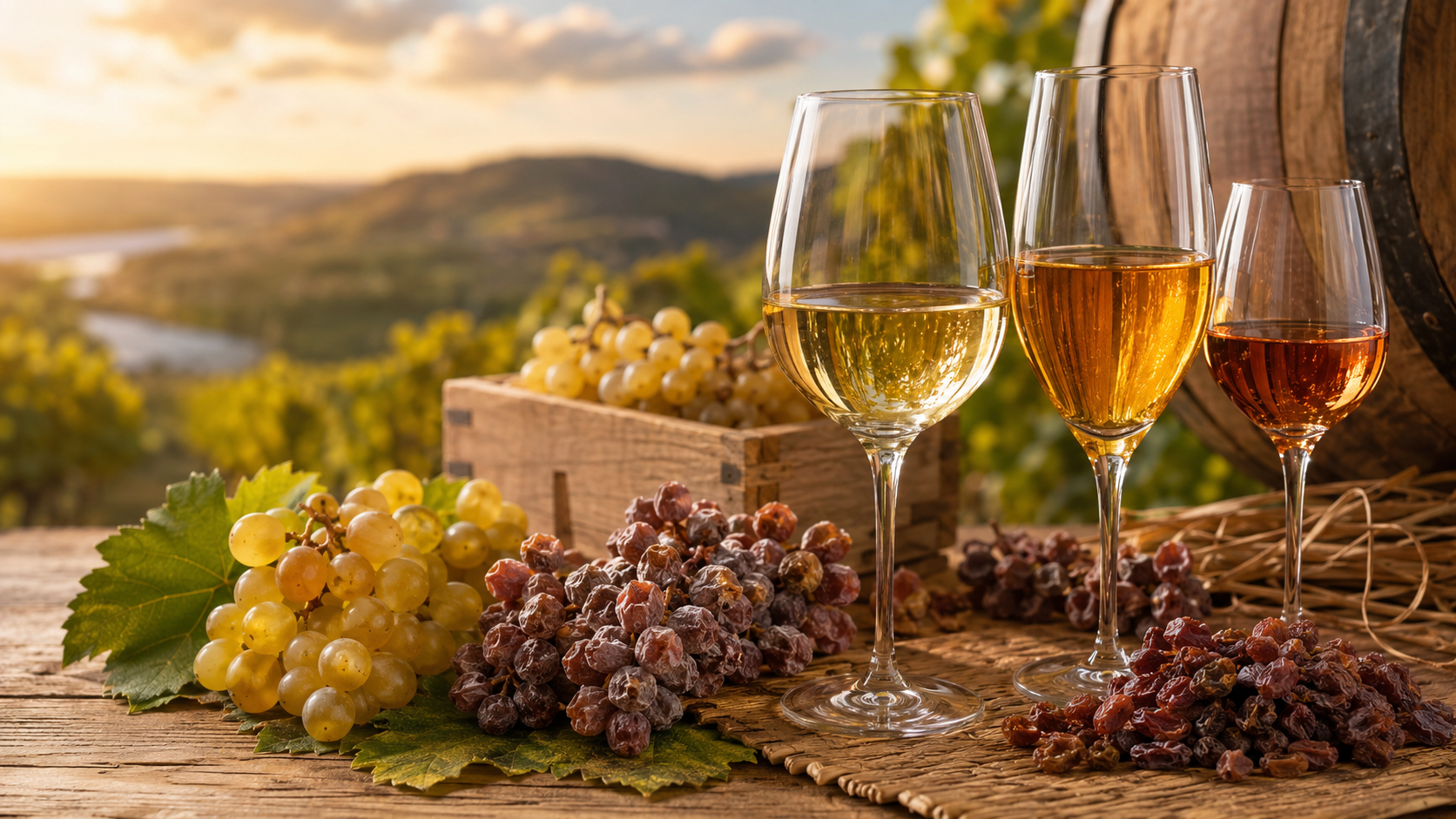
When I talk with friends about dry wines vs sweet wines, I often hear something like, “I can’t stand sweet wine!” My response to that is, “ok, that’s fine. We all have our personal preferences.” But I’m thinking, “perhaps there is a way to drink them that you haven’t yet tried.” Sauternes, for example, is considered a sweet wine (level five on the WSET scale) and definitely isn’t a wine I would drink by itself. But I think it is a fantastic choice when I’m eating a frosted lemon pound cake. The sweetness of the wine is going to make the wine and the pound cake taste so much better.
Food pairings matter, especially when it comes to the different levels of sweetness. Be sure to sign up for my emails and/or follow me on my socials to get notified when I post about food and wine pairings.
I’d like to hear what you think. Was this post helpful? Do you like sweet wines? If so, what is your favorite? Keep the conversation going with a comment.


Leave a Reply