
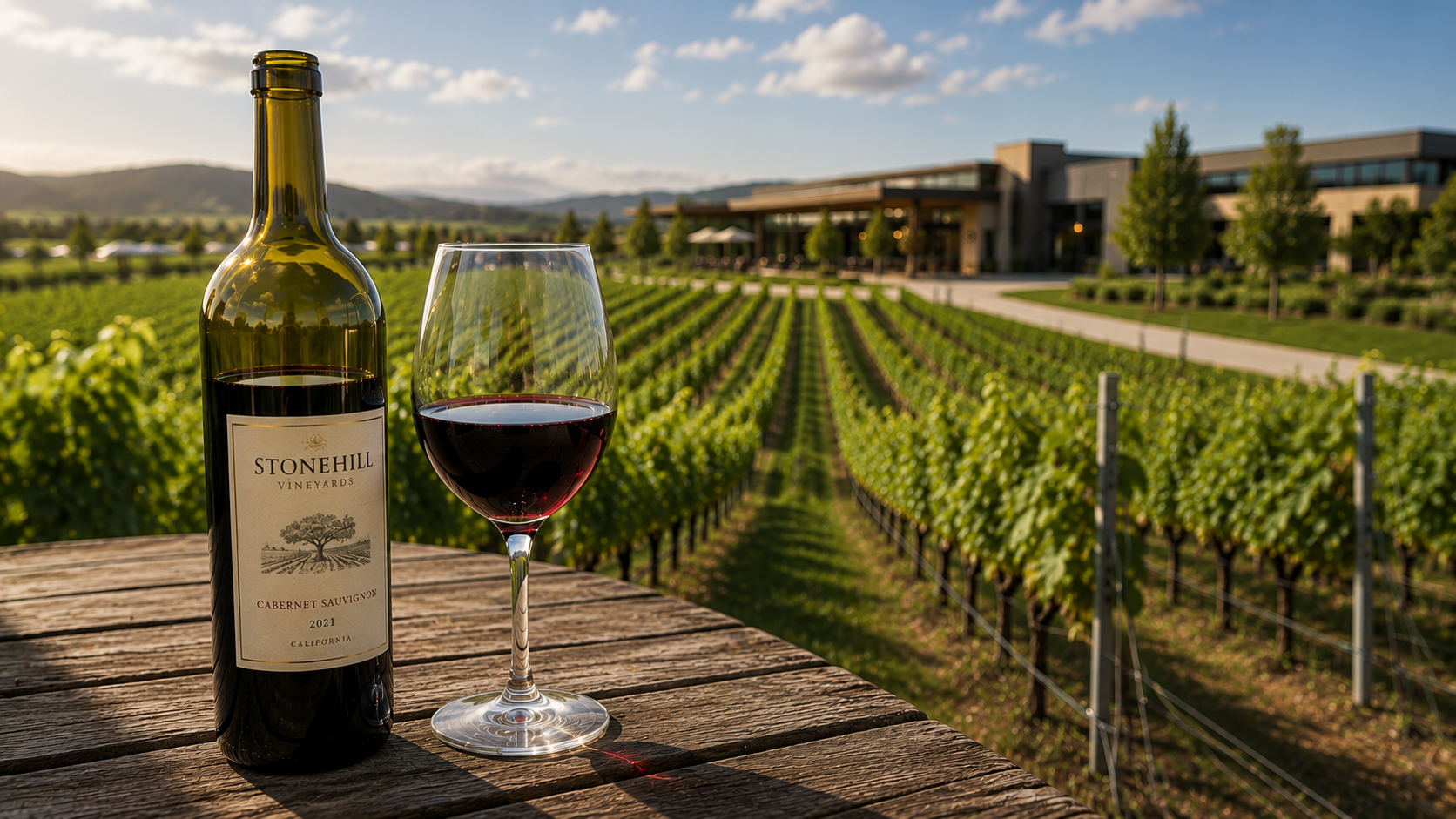
You’re drinking a glass of red wine. Maybe it’s a big, bold Cabernet Sauvignon. Maybe it’s a light and fresh Beaujolais. Whatever it is, at some point it was just a bunch of grapes hanging on a vine.
So how exactly did we get from that to this?
Making red wine is actually pretty easy to understand. Sure, winemakers can get incredibly technical about it—and they make dozens of decisions that can change how a wine ultimately tastes—but you don’t need a degree in chemistry to understand the basics.
So grab a glass and let’s make some red wine.
Step 1: Pick the Grapes
The first big decision winemakers make is when to pick the grapes.
As grapes ripen, their sugar levels generally increase while their acidity decreases. Their flavors and tannins also develop. Pick too early and you might end up with a wine that tastes overly tart. Wait longer and you’ll generally get riper fruit flavors, more sugar and, potentially, more alcohol.
So the winemaker is looking for that Goldilocks moment when everything is just right for the style of wine they want to make.
The grapes can be harvested by hand or by machine. Hand harvesting allows for more careful selection and is necessary in some vineyards—particularly those planted on steep hillsides. Machine harvesting is much faster and can be very efficient but can also be cost-prohibitive for smaller wineries.
Either way, once they’re picked, it’s off to the winery.
Step 2: Sort, Destem, and Crush
When the grapes arrive, they may go through a sorting process to get rid of leaves, damaged grapes, and anything else we probably don’t want ending up in our Cabernet. Winemakers often refer to this as MOG (material other than grapes.)
Next, the stems usually come off.
Stems contain tannins and can contribute herbal or woody characteristics to wine, so many winemakers remove them. But—and you’ll hear this a lot when we talk about wine—there are exceptions.
Once the stem or no-stem question has been decided, the grapes are usually gently crushed. And when I say “crushed,” don’t picture someone stomping grapes like Lucy. (If you don’t get that reference, check out this classic I Love Lucy moment.) Although, yes, people still foot-stomp grapes in some wineries.
Modern crushing is generally pretty gentle. We really just need to break the grape skins and release some juice.
Which brings us to something pretty important.
Step 3: How Red Wine Gets Red
The juice of most wine grapes, whether red or white, is basically clear. The red color for red wine comes primarily from the skins. And that fact explains one of the biggest differences between making red wine and making white wine.
When making most white wines, the winemaker presses the grapes and separates the juice from the skins before fermentation.
With red wine, we leave the skins in there. The crushed grapes create a mixture of juice, skins, seeds, pulp, and sometimes stems called the must.
Then yeast is added. Yeast consumes the natural sugar in the grape juice and converts it into alcohol and carbon dioxide.
In very simplified terms:
Grape sugar + yeast = alcohol + carbon dioxide
As fermentation continues, the juice sits in contact with the skins. That contact extracts color, flavors, and tannins. The longer and more intensely the juice interacts with those skins, the more extraction the winemaker can potentially get.
That’s how our mostly clear grape juice starts becoming red wine.
Step 4: Manage the Cap
There’s one small problem. The grape skins don’t politely stay mixed into the juice.
Carbon dioxide produced during fermentation pushes the skins and other grape solids toward the top of the fermentation vessel, where they form a thick layer called the cap.
The winemaker wants those skins interacting with the wine, so the cap has to be managed, and this is usually done one of two ways.
- One method is called punching down, which is pretty much exactly what it sounds like. The winemaker pushes the floating grape skins back down into the fermenting wine.
- Another technique is pumping over. Wine is pumped from the bottom of the tank and sprayed over the grape skins at the top.
Different wineries have their own techniques, but the goal is basically the same: keep the wine and skins interacting so we can extract the color, flavor, and tannin we want.
Step 5: Time to Press
Eventually, it’s time for the wine and the grape skins to go their separate ways. Some wine drains naturally from the fermentation vessel. That’s called free-run wine.
But those grape skins are basically little wine-soaked sponges, so we’re not throwing them away just yet. They go into a wine press, which gently squeezes out the remaining liquid. That’s called—shocker!—press wine.
At this point, we’ve officially gone from grape juice to something we’d recognize as red wine. But we’re not quite finished.
Step 6: Soften It Up
Most red wines go through another process with an intimidating name: Malolactic fermentation.
You can just call it “malo” or MLF. The wine people will know what you mean. Despite the name, this isn’t the fermentation that creates the alcohol. Instead, for this process bacteria convert sharper malic acid into softer lactic acid.
An easy way to think about it is this:
Malic acid → think tart green apple.
Lactic acid → think softer, creamier acidity.
The result is a wine that generally feels rounder and softer. And nearly all red wines go through this process.
Step 7: Let It Age
Now the wine needs some time to mature. And where the winemaker puts it can make a big difference. Stainless steel doesn’t add flavor, so it’s great when you want to preserve fresh, fruity characteristics. Concrete is also relatively neutral but can allow tiny amounts of oxygen interaction and can contribute to the wine’s texture.
And then there’s the vessel everybody associates with red wine: Oak.
Oak barrels can contribute flavors like vanilla, toast, baking spice, cedar, smoke, and chocolate.
But oak does something else that’s arguably just as important. Wood allows small amounts of oxygen to interact with the wine over time. That slow oxygen exposure can help soften tannins and allow the wine to develop greater complexity.
New barrels contribute much more flavor than older barrels. The type of oak matters. The size of the barrel matters. How heavily it was toasted matters. And how long the wine stays in it matters.
Some red wines never see an oak barrel at all. Others might spend two years or more in one. It all depends on what the winemaker is trying to accomplish.
Step 8: Blend It…Or Not
When you hear “blend,” you might immediately think about mixing different grape varieties. And sometimes that’s exactly what’s happening. Cabernet Sauvignon might be blended with Merlot. Grenache might be blended with Syrah and Mourvèdre.
But blending can also mean combining wines made from the same grape.
Maybe one Cabernet came from Vineyard A and another came from Vineyard B. Maybe one barrel tastes particularly fruity while another has more tannin and structure. The winemaker can combine them to create the final wine.
Think of it like cooking. You’ve got all these different ingredients in front of you, and you’re figuring out how much of each will make the finished dish taste the way you want it to.
Step 9: Clean It Up and Put It in a Bottle
Before bottling, the wine usually needs to be clear and stable. Some of this happens naturally. Given enough time, particles suspended in wine settle to the bottom of the tank or barrel.
Winemakers can also use various techniques to remove unwanted particles. How much they do varies enormously. Some wines are heavily filtered. Others are bottled with minimal filtration—or none at all.
Finally, the wine goes into a bottle and gets a cork, screw cap, or another closure and a label.
Some wines are ready to drink relatively soon. Others might spend additional months or even years aging in the bottle before they’re released.
And then, finally, someone buys the bottle, pulls the cork and pours a glass.
There’s only one step left…
Step 10: Drink It
‘Nuf said.


Leave a Reply