
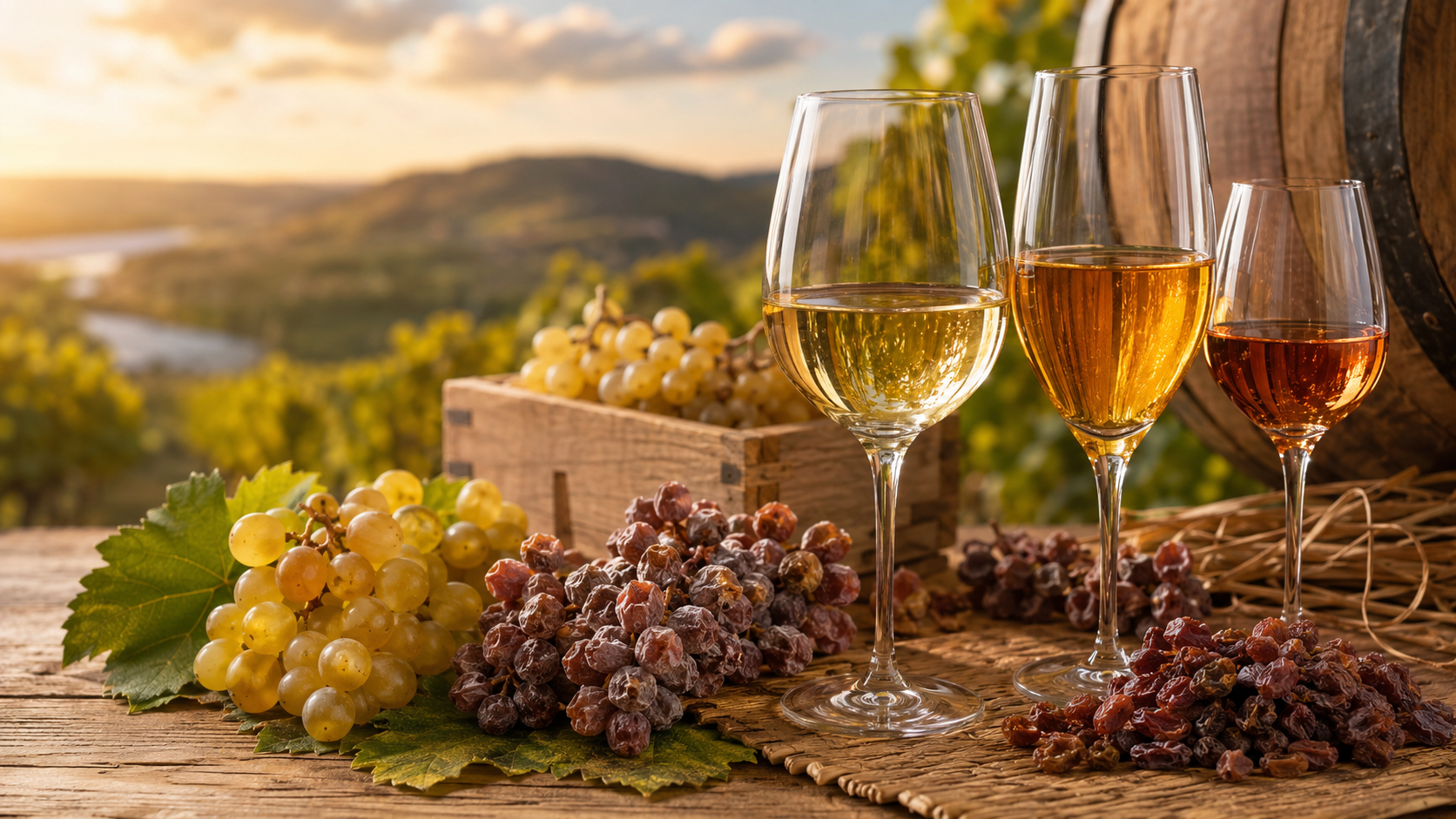
Sweet wines seem to have an image problem. People often incorrectly associate sweet with cheap or low-quality when, in fact, some of the world’s most expensive wines (like Chateau d’Yquem’s Sauternes that, in some vintages, sells for over $1,000 a bottle) and high-quality wines are in fact sweet.
Sweet wines, in my opinion, deserve more attention and understanding of how they are made.
I’ve already covered the basics of how red wines and white wines are made, with many of the production steps being quite the same or similar. Here I’ll diverge from that and focus on what is different in each step to make sweet wines sweet.
Step 1: Pick the Grapes
There are three things that can happen in the vineyard or with the harvest that differs for sweet wines:
- Botrytis Cinerea
- Late harvest
- Freezing
Botrytis Cinerea is a fungus that grows on berries like grapes, strawberries and blueberries, and it can be really bad or really good! When it occurs in certain climates with persistent humidity, it’s called grey rot and ruins the berries. But when it occurs in climates with humid mornings followed by warm and dry afternoons, it’s called noble rot and helps to produce incredible sweet wines.
Winemakers who produce Sauternes in France or Tokaji in Hungary pray for noble rot because that is what makes their wines sweet. Botrytis grows on the grapes and punctures tiny holes in the skin. This causes some of the water/juice inside to evaporate, shriveling the grapes and concentrating the sugar in them. This results in higher levels of residual sugar after fermentation and delicious sweet wine.
Don’t worry! The winemaking process ensures that no living fungus or harmful mold gets into your glass!
Winemakers can also choose to harvest their grapes later than normal. Grapes start the growing season with very high acid and very low sugar. As the grapes grow and mature, the acid decreases and the sugar increases. The winemaker keeps close watch on these levels for dry wines, so they can harvest when the levels are at their optimal points. Winemakers of sweet wines let the grapes stay on the vine longer so the sugar levels increase even more. This also will result in higher levels of residual sugar after fermentation. This method is often used for sweeter Rieslings and off-dry Chenin Blanc.
Some winemakers, especially those in colder northern climates, leave the grapes on the vine until the weather turns cold enough to freeze them. The frozen grapes are then harvested and immediately pressed. The extremely rich and sweet juice then gets fermented into what is known as ice wine.
Step 2: Sort, Destem, Press
Grapes for sweet wines generally go through the same pre-fermentation processes as dry wines…with one notable exception.
An ancient drying method is still used today in some parts of the Mediterranean. After harvest, the grapes are spread out on mats or are hung from the rafters of a hot drying room for several months. This enables the grapes to dry out like raisins, losing water content but keeping the sugar, and resulting in higher residual sugar after fermentation.
Step 3: Skin On or Off?
There really is no difference in this step for sweet wines. If the sweet wine is red, the winemaker will leave the skin on during fermentation. If the wine is white, the juice gets pressed off before fermentation.
Step 4: Fermentation
Fermentation of sweet wines begins just like fermentation of dry wines. Yeast consumes the sugar and produces carbon dioxide (which is removed) and alcohol.
What is different about fermentation for sweet wines is when the fermentation stops. As alcohol is produced, the alcohol content rises until it gets to a point at which it “kills” the yeast. Once the yeast can no longer function, it can no longer consume the sugar and fermentation stops. (This is why the timing of harvest for dry wines is so important, so that yeast isn’t killed before the sugar is all used up.)
In addition to the natural process of stopping fermentation, the winemaker can use a couple other methods to stop fermentation and ensure that there is enough sugar remaining (referred to as residual sugar.) They can control the temperature and chill the fermenting wine, which stops the yeast activity. With this method, they also need to employ additional procedures to make sure fermentation doesn’t restart after the wine has been bottled. The winemaker can also fortify the fermenting wine with a higher-alcohol spirit.
Fortified wines
Fortification occurs when a higher-alcohol spirit (like brandy) is added to the juice. Not all fortified wines are sweet. It all depends on when the fortification occurs, either during fermentation or after fermentation. If it happens during fermentation, then the wine will be sweet. This is because the elevated alcohol level kills the yeast and stops fermentation while a substantial amount of sugar remains. This usually happens around the 18-20% alcohol range. Some better-known examples include Port, Marsala, and Banyuls.
The remaining steps for producing sweet wines are all similar to that for dry wines, including the final step: enjoying it.
Pairing with Food
Most sweet wines are not meant to be sipped on their own because they can be perceived as overly sweet. But when paired with the right food, sweet wines can seem more balanced.
Sweetness in food lessens the perception of sweetness in wine. That is why many people refer to some sweet wines as dessert wines. On the opposite side of the spectrum, a dry wine can taste overly bitter when paired with sweet food.
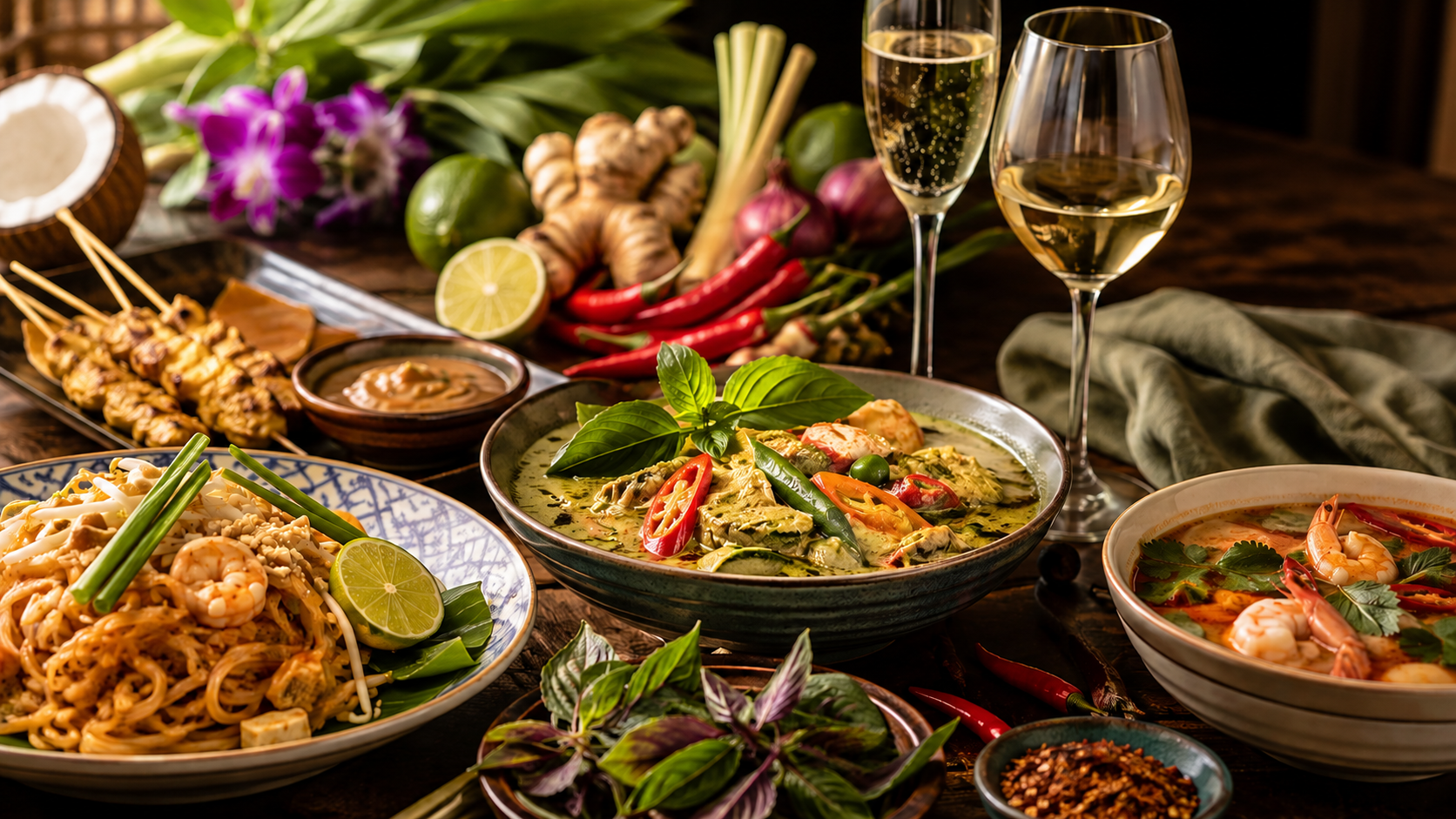
Wines with some sweetness, like an off-dry Riesling or Chenin Blanc, can pair well with spicy foods. The heat from spicy foods can increase the perception of tannins or bitterness in dry wines. Sweetness, on the other hand, can tamp down the heat of spicy foods and make both more enjoyable.
The next time you pass by the sweet wines at the wine shop, stop for a minute and think about all the decisions the winemaker had to make to get the wine into the bottle. And perhaps you’ll take one home to appreciate even more!


Leave a Reply