
If you ask someone to name a famous Spanish wine region, chances are Rioja will be one of the first names that comes to mind.
And for good reason.
Rioja is Spain’s most famous wine-producing region and one of the most respected wine regions in the world. It is well known for its red wines, which are often aged in oak barrels and can develop incredible complexity over time.
But Rioja is about much more than just big, oaky red wines. The region has a variety of climates and vineyard landscapes, several important grape varieties, and a wine classification system that tells you something about how the wines are made and aged.
So let’s take a look at what makes Rioja special.
Geography and Climate
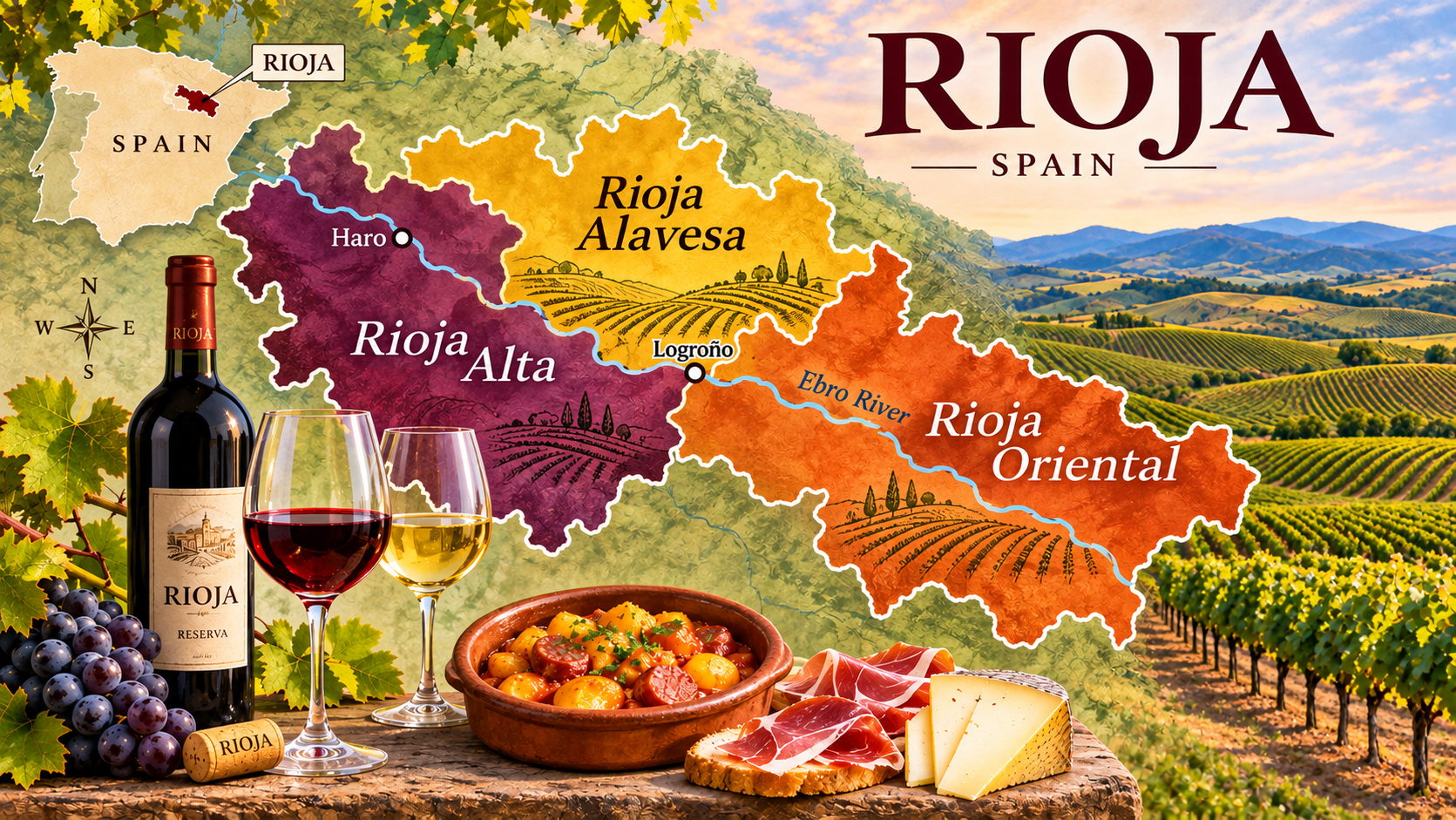
Rioja is located in north central Spain. It sits just south of the Basque Country not far from the French border. Its vineyards stretch about 60 miles from west to east, with the Ebro River running through the heart of the region.
One of the interesting things about Rioja is that it experiences two different climate influences: Atlantic and Mediterranean. The western part of the region experiences more Atlantic influence, with cooler temperatures and more rain. As you move east, the climate becomes warmer and drier, with greater Mediterranean influence.
The region is also protected to the north by the Sierra de Cantabria mountain range, which helps shield the vineyards from some of the cooler, wetter weather coming from the Atlantic.
Why does all this matter?
These differences in climate, elevation, and soil create a variety of growing conditions that allow different grapes to thrive. They also contribute to differences in the character of the wines, from fresher, more structured reds in the west to fuller, riper wines in the east.
Three Subregions
Rioja is divided into three main subregions, each with its own characteristics.
- Rioja Alta is located in the western part of the region. It experiences more Atlantic influence and generally cooler growing conditions. Its wines are often known for their balance, freshness, and aging potential.
- Rioja Alavesa is located just north of the Ebro River and is known for its higher-altitude vineyards and limestone-rich clay soils. The wines are often elegant and aromatic, with bright acidity and great structure.
- Rioja Oriental was formerly known as Rioja Baja and is the easternmost and generally warmest part of the region. Its warmer, drier climate is particularly well suited to Garnacha, producing wines that are often richer, fuller-bodied, and higher in alcohol.
There are plenty of exceptions to these generalizations, and individual vineyard sites and winemaking decisions can have an impact on the resulting wine. But understanding these three subregions gives you a good starting point when exploring Rioja.
The Headliner: Tempranillo
Roughly three-quarters of Rioja’s red wine production is made from Tempranillo, the region’s signature grape. It’s one of Spain’s most important red grape varieties, and while it is grown throughout the country, Rioja is where it has achieved its greatest international reputation.
Tempranillo wines typically have flavors of red and dark fruits including cherry, strawberry, plum, and blackberry. Depending on the growing conditions and/or winemaking techniques, you may also find notes of tobacco, leather, vanilla, spice, and earth.
Tempranillo generally produces wines with medium to full body, moderate tannins, and good acidity. It has the structure to age well, especially when combined with oak aging.
And that brings us to one of the things that makes Rioja exceptionally interesting: oak.
Traditionally, Rioja wines have spent considerable time aging in oak barrels, often American oak that can impart flavors of vanilla, coconut, and baking spices. Modern producers increasingly use French oak, larger vessels, or less oak influence to allow the fruit and vineyard characteristics to shine.
Neither approach is necessarily better. They simply produce different styles of wine.
Other Grapes to Know
While Tempranillo gets the most attention, Rioja is home to several other important grape varieties.
Garnacha (Grenache) is the second most important red grape in the region. It tends to produce fuller-bodied wines with ripe red fruit flavors, higher alcohol, and softer tannins. It is particularly well suited to the warmer conditions in Rioja Oriental.
Graciano and Mazuelo (Carignon) are interesting grapes that are often used as blending grapes, each contributing acidity and structure to red wines.
But Rioja isn’t just about red wines. While reds dominate production, the region also produces some excellent whites.
Viura (Macabeo) is the primary white grape of Rioja. It produces fresh, crisp wines with citrus and green apple flavors, and is sometimes aged in oak. Other white varieties include Tempranillo Blanca, Garnacha Blanca, Malvasía, and Verdejo.
Rioja also produces rosé wines (called Rosado in Spain) and even traditional method sparkling wines.
Rioja’s Aging Classifications
One of the things that distinguishes Rioja from many other wine regions is its traditional aging classification system.
When you pick up a bottle of Rioja, you may see one of four terms on the label. These terms tell you something about how long the wine has been aged before release, including how much time it spent in oak barrels and in the bottle.
Here’s what they mean:
- Genérico wines are generally younger, designed to emphasize freshness and fruit. They have no minimum aging requirements.
- Crianza red wines must undergo at least two years of aging, including a minimum of one year in oak barrels. These wines typically balance fresh fruit characteristics with some oak barrels.
- Reserva red wines must be aged for at least three years, including a minimum of one year in oak barrels and six months in the bottle.
- Gran Reserva red wines are traditionally the most prestigious and longest-aged wines. They must be aged for at least five years, including a minimum of two years in oak barrels and two years in the bottle.
There are also separate, shorter aging requirements for white and rosé wines in the Grianza, Reserva, and Gran Reserva categories.
Why does this matter?
The longer aging process allows the wines to develop additional complexity and enable fresh fruit aromas to evolve into dried fruit, leather, tobacco, and earthy notes, while the tannins become softer and more integrated.
It’s also worth noting that these classifications don’t necessarily tell you which wine is “better.” A young fruit-forward Rioja can be every bit as enjoyable as a mature Gran Reserva. It just depends on what you’re looking for.
Rioja’s Food Culture
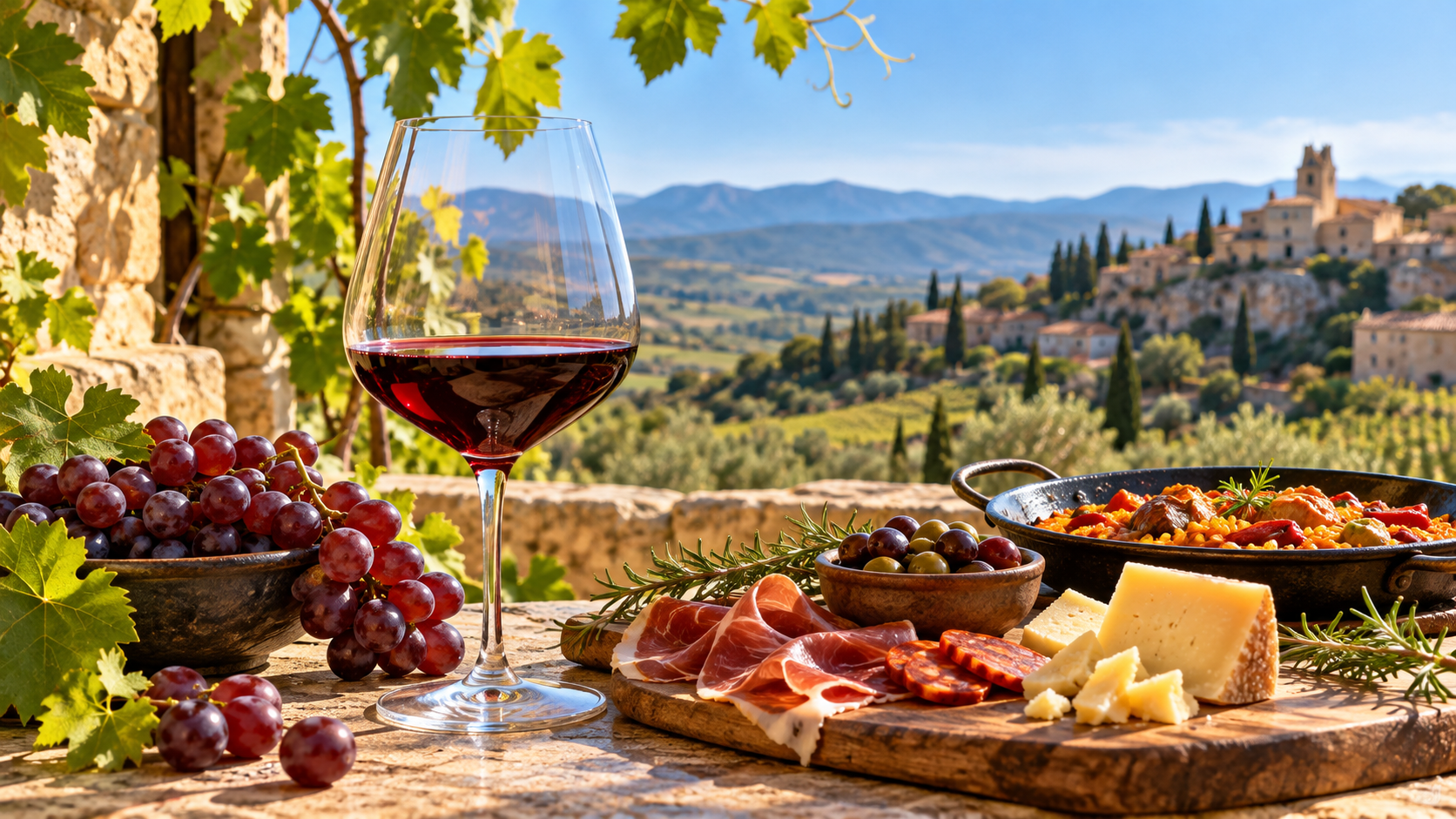
Like much of Spain, Rioja has a strong food and wine culture, and its location gives it access to some wonderful regional ingredients and culinary traditions. The region is well known for its lamb, roasted meats, peppers, mushrooms, and hearty vegetable dishes.
One of the best-known dishes is Patatas a la Riojana, a rustic potato and chorizo stew flavored with paprika and peppers. It’s a terrific match for a medium-bodied Rioja Crianza. Roasted lamb is another regional favorite, pairing well with a more structured Tempranillo-based Reserva or Gran Reserva.
And don’t overlook the region’s cheeses. Spain produces exceptional sheep’s milk cheeses including Manchego, which can be terrific with Rioja reds.
The combination of savory food, rich flavors, and wines with balanced acidity and tannins makes Rioja an especially food-friendly wine region.
Rioja is one of those wine regions that offers something for just about everyone.
Whether you enjoy fresh, fruit-forward reds, more structured wines with oak influence, or mature wines with layers of complexity, there’s a style of Rioja worth exploring. And while the region is famous for its Tempranillo-based reds, don’t overlook its Garnacha wines, whites, and rosés.
What makes Rioja special, though, is the combination of tradition and evolution. You can visit historic winners that have been making wines for generations while also discovering newer producers who are putting a fresh perspective on what Rioja can be. Rioja offers an experience that goes well beyond the glass.

Leave a Reply