
Has this ever happened to you? You open a bottle of wine with dinner, enjoy a glass or two, and put the cork back in the bottle. A week later you remember you’ve still got half a bottle of wine. Is it still good? Should you pour it out?
The good news is that opening a bottle of wine doesn’t mean you have to finish it that night. Most wines will be fine for a few days after opening, provided they are stored properly. How long they last depends on several factors including the type of wine, its structure, and how you store it.
Let’s look at what happens to wine after you open the bottle, how long different wines typically last, and what you can do to keep your wine fresher longer.
Why does wine go bad?
The biggest culprit to wine losing its freshness and flavor is oxygen. When you open a bottle, you expose the wine to oxygen, which begins the chemical process called oxidation.
A little oxygen isn’t necessarily a bad thing. Allowing certain wines to “breathe” can actually release their aromas and soften their flavors and make it more enjoyable. However, prolonged exposure to oxygen can have the opposite effect. Oxidation causes wine to lose its fresh fruit aromas and flavors.
Another factor is the activity of certain bacteria that can convert alcohol into acetic acid. This is the same acid that gives vinegar its characteristic smell and taste. As wine in an open bottle deteriorates, it can develop strong vinegar-like characteristics.
Temperature also plays a role. Warmer temperatures speed up the chemical reactions that cause wine to go bad, which is why proper storage, even after opening, is so important.
How long does wine last?
Not all wines age or deteriorate at the same rate. Here are some guidelines for how long you can typically expect different types of wines to keep after opening, assuming they are properly resealed and stored in the refrigerator.

How can you keep opened wine fresh longer?
A few simple habits can make a big difference.
Put the cork back in.
As soon as you’ve poured your wine, reseal the bottle. If the original cork is still intact, use it. Otherwise a reusable stopper works too. The goal is to limit the amount of oxygen getting into the bottle.
Put the bottle in the refrigerator – even the reds!
This is a common misconception about open wine storage. While red wines are generally served warmer than white and sparkling wines, that doesn’t mean they have to be stored at room temperature after opening.
Cold temperatures help to slow down the chemical processes in oxidation, so keeping the wine cool will make it last longer. You’ll just need to take it out of the refrigerator a while before pouring your next glass, especially for red wine.
Store the opened bottle upright.
Keeping the bottle upright will reduce the surface area of the wine exposed to the air inside the bottle. This can help slow down the oxidation.
There are also a couple of gadgets you can try to make your opened wine last longer.

The cheaper option is vacuum stoppers. These are stoppers that you place on the bottle then use a pump to remove the oxygen. Do they work? Maybe. Some wine experts love them; some think they’re a waste of money. There have been some studies done on these that have been fairly inconclusive about their effectiveness. But they’re pretty affordable (you can get the pump and two stoppers for $20 or less) and easy to use. I use them and believe I get about an extra day from an opened bottle with them.
The more expensive gadget option is the Coravin®. At about $280 for the basic model, this one is for those who are really serious about their wine. Essentially this contraption sticks a thin needle through the cork so you aren’t removing it. It then injects argon, an inert gas, into the bottle to increase the pressure so you can pour out wine through the needle. Then you remove the needle and the cork expands to reseal the bottle. So no oxygen gets to the wine and therefore there’s no oxidization.
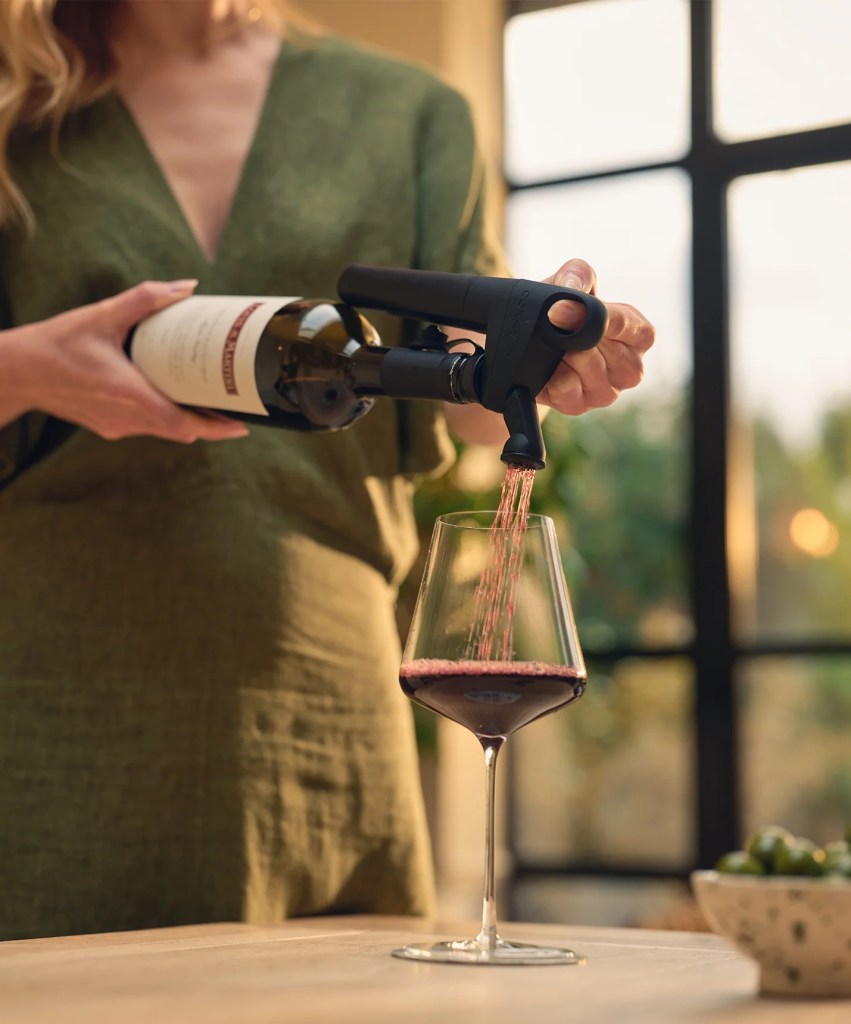
I primarily use my Coravin with some more expensive bottles that I might want to enjoy over the course of a few months. Being able to pour a glass without actually pulling the cork gives me the peace of mind that the fifth glass a few months down the road will be as fresh as the first glass today.
Note: This only works with natural corks, not synthetic ones. Natural corks are elastic and will close around the hole the needle creates once the needle is removed. Synthetic corks will no do this so the hole will remain and oxygen will be able to enter the bottle.
What about boxed wine?
Many boxes of wine state that once opened, the wine will last anywhere from four to six weeks. And it had better, since a lot of boxes of wine have the equivalent of four bottles or more! What makes boxed wine last longer is the spigot and bag help keep oxygen from getting to the wine. When you pour a glass, air doesn’t get in the bag. The volume of what’s in the bag (wine) just gets smaller.
And for those who are anti-boxed wine, I encourage you to read this!
Opened wine (whether bottled or boxed) does go bad, but you can take these easy steps to make it last longer. Personally, I think the best way to ensure an opened bottle’s freshness is to invite enough friends over to finish the bottle together the same evening you open it!


Leave a Reply