
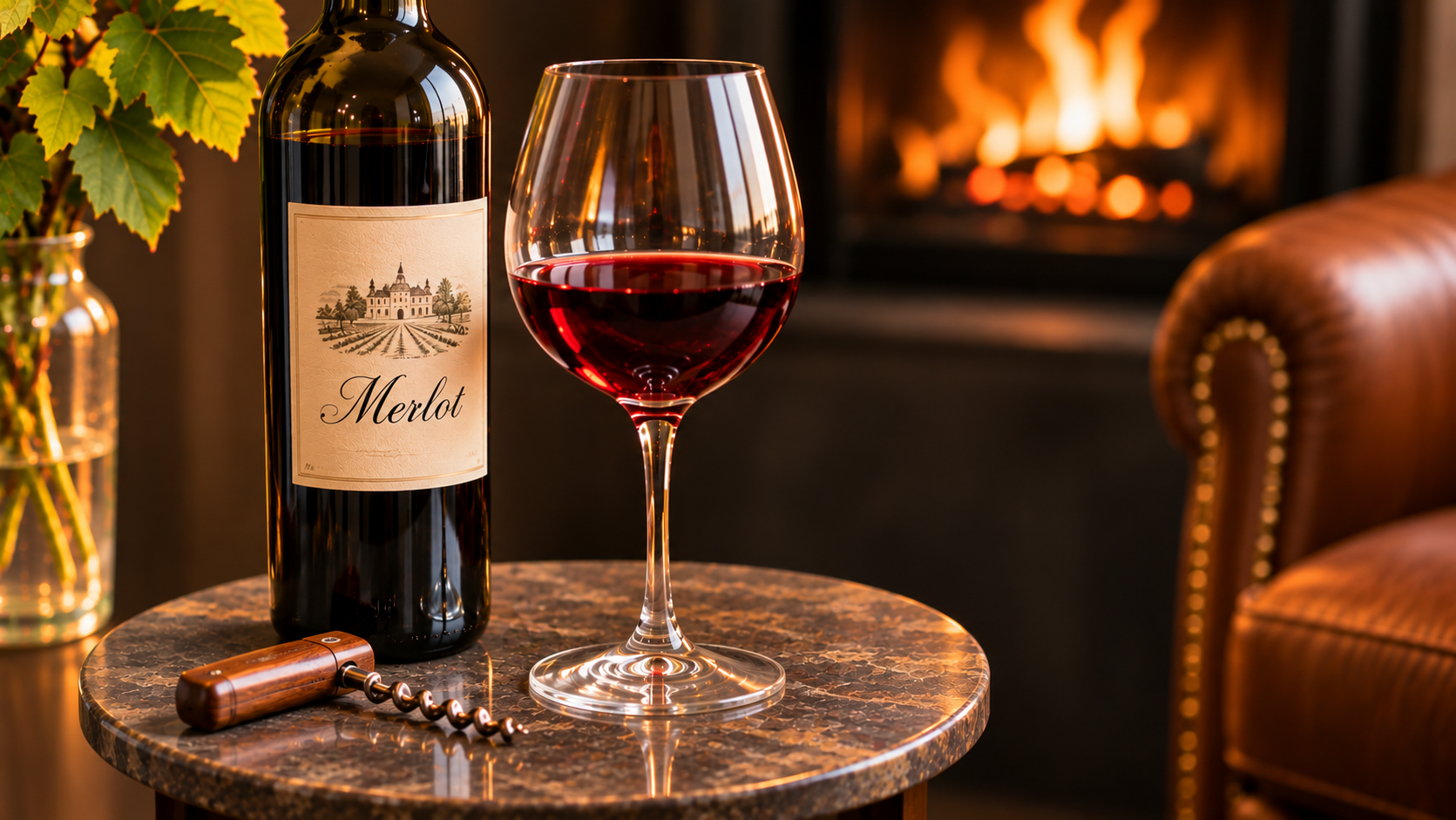
If you’ve ever seen the movie Sideways, you probably already know what scene I’m about to refer to. One of the characters expressed his opinion of Merlot in a not-so-eloquent, “I’m not drinking any f$%&ing Merlot!” that became something of a wine-world catchphrase.
But here’s the thing: Merlot deserves a lot more respect than it sometimes gets.
It’s one of the most widely planted grapes in the world, a key ingredient in some of Bordeaux’s most famous wines, and the star of some extraordinarily expensive bottles. At the same time, it can produce enjoyable, affordable wines that are perfect for a casual Tuesday night.
So whether you’re a longtime Merlot fan or someone who had avoided it because of Sideways, it’s time to give this grape another look.
Where does it grow?
Merlot’s home is Bordeaux in southwestern France, where it has been grown for centuries. It’s particularly important on Bordeaux’s Right Bank, where the soils and growing conditions are well-suited to the grape.
Today, Merlot is planted in wine regions all over the world, including:
- France
- Italy
- United States
- Chile
- Argentina
- Australia
- New Zealand
- South Africa
One of the reasons Merlot has become so popular with winegrowers is that it generally ripens earlier than Cabernet Sauvignon, which can be particularly helpful in cooler climates where getting grapes fully ripe before the end of the growing season can be difficult.
Merlot also adapts well to different growing conditions although the wines it produces can vary considerably depending on the climate, soil, and winemaking techniques.
What does it taste like?
Merlot is often described as a softer, more approachable alternative to Cabernet Sauvignon. While there are exceptions, Merlot typically has softer tannins and a slightly more generous fruit character.
Typical flavors include:
- Plum
- Black cherry
- Blackberry
- Raspberry
- Blueberry
- Chocolate
- Herbs
In cooler climates, Merlot can show more red fruit and earthy characteristics. In warmer climates, you’ll often find riper dark fruit flavors. Oak aging can also contribute flavors of vanilla, cedar, and sweet spices.
Merlot is generally a medium- to full-bodied wine with moderate acidity and moderate tannins. Alcohol levels typically fall somewhere around 13% to 15% ABV although this varies depending on where the grapes are grown and how ripe they become.
And here’s something worth remembering: Merlot isn’t a sweet wine. Its ripe fruit flavors can make it seem sweet, but more Merlot is made in a dry style, meaning it contains very little residual sugar.
Merlot and Bordeaux
If you want to understand how important Merlot is, look no further than Bordeaux.
Bordeaux wines are traditionally made from blends of several grape varieties rather than a single grape. The two most important red grapes are Merlot and Cabernet Sauvignon, with Cabernet France, Petit Verdot, Malbec, and Carmenère playing supporting roles.
Here’s where things get interesting.
Bordeaux is separated by two major rivers. The resulting geography creates two areas commonly referred to as the Left Bank and the Right Bank.
The Left Bank has gravelly soils that drain well and retain heat which help Cabernet Sauvignon to ripen successfully. The Right Bank has clay-rich soils that retail moisture which helps Merlot to ripen well.
So while you’ll most likely encounter both grapes in a Bordeaux blend, those from the Left Bank will have a predominance of Cabernet Sauvignon, while those from the Right Bank will be predominantly Merlot.
And some of these are you’re everyday grocery-store wines. Some bottles sell for thousands of dollars!
Merlot as a Single Varietal Wine
Of course, Merlot doesn’t always need a supporting cast.
In many parts of the world, it’s bottled as a single varietal wine, meaning the wine is made primarily from Merlot rather than a blend of several grapes.
These wines can be quite different depending on where they’re produced.
California Merlot often features ripe black cherry, plum, and blackberry flavors. These wines tend to be rather full-bodied with noticeable oak influence. Washington State has also developed an excellent reputation for Merlot. The Columbia Valley’s warm, sunny growing season helps to develop ripe fruit flavors while the cooler nighttime temperatures help preserve acidity.
Chile produces some excellent Merlot at affordable prices, while Merlot in Italy can be rich and concentrated, sometimes blended with Sangiovese.
Just remember that Merlot isn’t one particular style of wine. It can be fresh and fruity, rich and concentrated, or structured and complex.
The Sideways Effect
Let’s go back to Sideways for a moment.
Released in 2004, the movie followed two friends traveling through California wine country. One of the characters, Miles, had a strong dislike for Merlot. His “I’m not drinking any f$%&ing Merlot!” is one of the most memorable lines of the movie.
And it had a real-world impact.
Following the movie’s release, Merlot sales experienced a significant decline in popularity. It is difficult to attribute all of that change to a single movie, but Sideways certainly helped influence how American consumers thought about the grape.
What about pairing it with food?
Merlot is very versatile when it comes to food pairing.
Its moderate tannins, fruit flavors, and relatively approachable acidity make it a good match for a wide variety of dishes.
Try it with:
- Grilled steak
- Burgers
- Pork tenderloin
- Mushroom dishes
- Roasted vegetables
- Hard cheeses like aged cheddar or Gouda
Merlot is particularly good with foods that have a little richness without being overly heavy.
One thing to keep in mind: Merlot isn’t necessarily the best choice for extremely spicy foods. Alcohol and tannins can make chili heat seem more intense.
Why you should try it
Merlot is one of those grapes that has suffered a little from its own popularity.
For years it was everywhere. Some producers made excellent wines, while others flooded the market with inexpensive bottles that didn’t do the grape justice. Then Sideways came along and gave people another reason to overlook it.
But great Merlot is great wine.
It can be soft and easy-drinking enough for somebody just getting started with red wine, yet complex and age-worthy enough to satisfy even the most experienced wine enthusiast.
And while the legendary bottles from Bordeaux can cost a small fortune, there are plenty of excellent Merlots available in the $15 to $30 range.
So don’t let a Hollywood movie dictate what you drink. The next time you’re shopping for red wine, grab a bottle of Merlot and see for yourself.
Don’t miss a single blog post. Subscribe below to be notified of each new post, whether it’s about a particular grape, food pairing tips, or interesting aspects of wine history and culture.

Leave a Reply